Books can provide connection following tremendous loss
“We wanted to do something for you. Since books are the thing that bring us together and the place we turn to understand the world, we bought you a $50 gift certificate to a store called Book Train.”
My friends Robyn and Mandy sent that text the morning after I learned my sister Cristin had died. I had moved to Glenwood Springs, Colorado, little more than a week earlier, and I was thrust into the greatest personal tragedy I’d known. In some ways, I was fortunate; I lived with best friends. Because of them I already had a community that would rally around me. But there are also aspects of grief that can only be faced alone.
Books are often my companion in such moments. And my friends understood.
Somehow I had pulled myself out of bed and dressed for work that morning. I drove to Aspen for meetings, the bluebird sky and thick layers of accumulated snow a glaring contrast to the darkness of my emotions. I called friends to break the news as I drove up and down state highway 82. Then I pushed myself to my newsroom, where I explained to my still-new colleagues why they may find me intermittently crying at my desk in the coming months.
That afternoon I walked to Book Train, retrieved my gift certificate and asked the woman behind the counter for reading recommendations. What do you read when you’re in mourning, when the new facts of your own story seem more like fiction?
The night before, I’d sat on the phone with my parents as we awaited a coroner’s confirmation that my sister was dead. I had to force myself to bed afterward. After scrawling a draft of Cristin’s obituary in my journal, I curled up with a favorite book. I literally curled around it — didn’t read it, as exhaustion had set in — but its presence soothed me like a favorite stuffed animal calms a toddler.
The bookseller fought a shocked expression as I told her why I’d come to the store that day. It wouldn’t be the last time my candor about death caught someone off guard. I didn’t have it in me to downplay my loss for a stranger’s comfort. Compassion overtook her, though, and she joined me on the customer side of the register.
Together we walked around the store, selecting volumes from shoulder-high bookcases filled with latest releases and best sellers. She focused on novels, pulling stories I could lose myself in. I asked for space after we accumulated a stack.
The store was simple, designed for sales, not lounging. Without a natural place to study the books in my hands, I sank to the floor between two shelves. I paged through the books, reading paragraphs at a time to try and answer my own question: What did I want to read in mourning? What could help me sit with my sorrow?
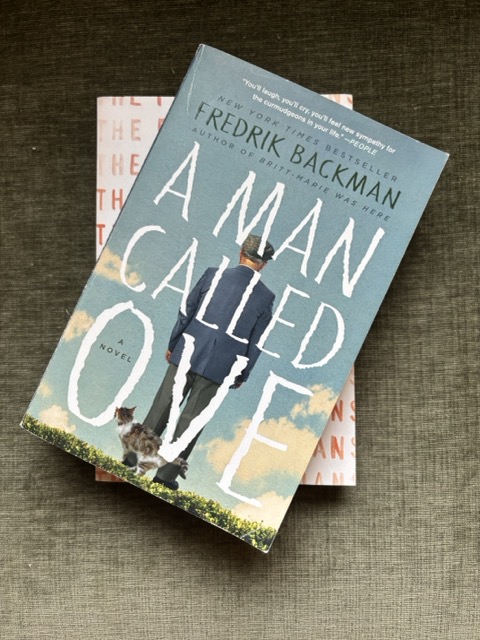
A Man Called Ove by Fredrick Backman
Genre: Novel
Grief focus: Death, suicide
Relationship: Spouse
Tone: Companionable, gentle, reflective
Takeaway: Even (or especially) after loss, community can offer us meaning.
“Death is a strange thing. People live their whole lives as if it does not exist, and yet it’s often one of the great motivations for living. Some of us, in time, become so conscious of it that we live harder, more obstinately, with more fury. Some need its constant presence to even be aware of its antithesis. Others become so preoccupied with it that they go into the waiting room long before it has announced its arrival. We fear it, yet most of us fear more than anything that it may take someone other than ourselves. For the greatest fear of death is always that it will pass us by. And leave us there alone.”
Fredrik Backman, “A Man Called Ove”
I took home “A Man Called Ove” by Fredrik Backman, a novel about a man dealing with loss and the community that continues to give his life meaning.
I tore through the novel in three days, carrying it from Colorado to Florida, where I joined my parents and living siblings in mourning. I left the book there with my mother. Her voracious reading habits were the model for my own; she always had a book handy when I was growing up, and I often read whatever she and my dad had recently picked up. Their influence led my preteen self away from Sweet Valley High and toward Michael Crichton, Stephen King and John Grisham. If “A Man Called Ove” brought me comfort, perhaps Mom would find some relief in it, too. After all, she was the person who taught me that books are home.
But our stories aren’t always tidy. Especially in the early days after Cristin’s death, I would often fold into crossword and logic puzzles for escape. I read for recognition, but sometimes I was slow to crack a book because they invited me to feel.
Yet sometimes books find us when we most need them. The winter and spring of 2017 introduced me to grief book after grief book. Everything may seem related when you’re focused on a specific subject, but the number of death memoirs that landed with me was remarkable.
The Futilitarians by Anne Gisleson
Genre: Nonfiction, memoir
Grief focus: Climate, death, illness, natural disaster, suicide
Relationship: Parent, sibling
Tone: Dark, reflective
Takeaway: Books and friends offer a way forward as we mourn.
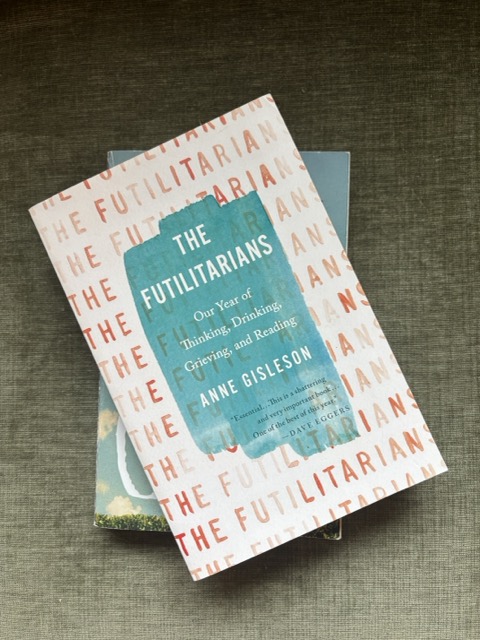
I was especially attuned to stories that incorporated sibling loss and addiction, and I pounced whenever BookPage offered relevant books for review. “The Futilitarians: Our Year of Thinking, Drinking, Grieving, and Reading” by Anne Gisleson not only met me in grief; Gisleson also turned to books in understanding her sorrow. The members of her Existential Crisis Reading Group turned to books and each other to cope with deaths, natural disaster, relationship struggles and more.
Gisleson’s youngest sisters, twins, committed suicide a year and a half apart. Although that isn’t my story, her struggles resonated:
“She wasn’t just doubting language, but also the redemptive power of the narrative. (Joan) Didion’s proclamation ‘We tell ourselves stories in order to live’ suddenly seemed like neurotic grandstanding. She reversed it, wondering what stories her sisters told themselves in order to die,” Gisleson wrote.
Losing my sister left a wound that would, in some ways, reorient my life. Cristin was the first in a series of deaths that defined my late 30s. Grief reading became my norm, and each loss sent me back to the bookstore.
During another visit to Book Train, I commented on both the sorrow and the comfort of what had become my death routine. My sister would have appreciated it; she was well acquainted with the power of losing herself in a book. Bookstores and libraries are filled with stories, with knowledge, with understanding.
That’s what I found from the shop’s cashier that day. She understood my sorrow and met it with kindness.
“It’s the hardest part of being human,” she said.
But the empathy offered by others — whether through a gift card, shared stories or in a brief, compassionate conversation — is one of the best.
Portions of this content adapted from the Post Independent (Glenwood Springs, CO) and reprinted with permission. Note: I am a Bookshop.org affiliate, and I’ll receive a small payment if you shop using the links above. I also strongly recommend supporting your local bookstore!
Email subscribers: Have you visited the new TheGriefLibrary.com? You can now browse my recommendations by relationship, grief focus and more.